
The Rainy-Day Daycare Bag: A Practical Packing Routine for Surrey Families
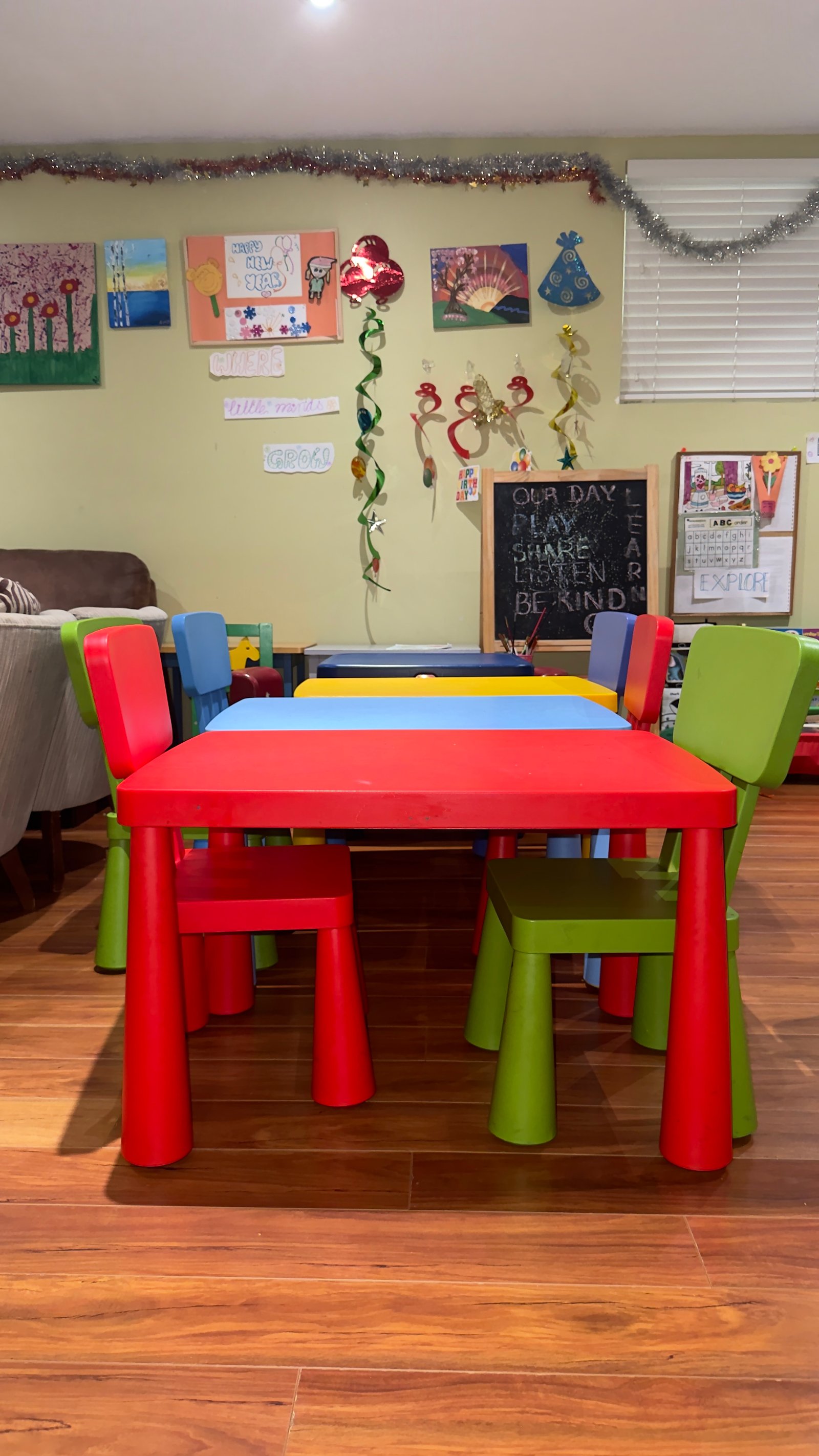
On a wet Lower Mainland morning, a daycare bag needs to do more than hold a raincoat. It should help your child change comfortably, keep damp clothing away from dry supplies and make essential items easy for a caregiver to find. A small, repeatable packing routine is usually more useful than a bag stuffed for every possibility.
For families in Surrey, Delta, Langley and White Rock, the best starting point is the caregiver’s own supply list. Then build a rainy-day kit around your child’s age, the journey to care and what can stay at daycare overnight.
Start with what stays and what travels
Before buying another backpack or set of rain gear, confirm how belongings are stored. A spare outfit kept at daycare can lighten the daily load, but only if there is space and you have a way to remember when it needs replacing.
At Sonia’s Tiny Toons Family Day Care, licensed family care serves children from 6 months through Grade 5, with a maximum of seven children. That age range makes individual packing important: an infant’s supplies will look different from a school-age child’s bag.
- Ask which supplies should come daily and which may remain at daycare.
- Confirm whether outdoor clothing needs to arrive already on your child.
- Ask how wet belongings are sent home and where replacement supplies should go.
- Check whether there are preferences about bag size, labels and storage containers.
Pack a compact dry-clothes kit
Think in complete changes rather than unrelated extras. Spare trousers are less useful if the only socks are damp. Choose familiar, washable clothing that fits now and is straightforward to put on and remove.
More clothing provides a bigger buffer, but it also adds bulk and makes items harder to find. Start with the agreed supply list and adjust if your child regularly uses everything.
- Pack a complete change: top, bottoms, socks and underwear if used.
- Add another pair of socks for wet-weather days.
- Include nappies or diapers and changing supplies according to the caregiver’s routine, if needed.
- Group each change in a labelled pouch so the pieces stay together.
- Check that spare clothing still fits when the weather or your child’s size changes.
Choose rain gear for the actual journey
A short walk from the car and a longer walk to school can create different clothing needs. Ask what outdoor activities are planned and choose layers accordingly rather than assuming the thickest coat is always best.
Separate waterproof pieces make it easier to replace one item or adjust layers. A one-piece rain suit keeps pieces together but may take more effort to remove. Consider what your child can manage and what works for the caregiver’s changing routine.
Sonia’s Tiny Toons is directly across from Cambridge Elementary, and school drop-off and pickup are available. Families using that service should clarify what rain gear travels to school and what stays at daycare.
- Check that boots fit with the socks your child actually wears.
- Practise coat fasteners at home without rushing.
- Label boots, rainwear and removable layers individually.
- Keep daily rainwear accessible rather than buried under spare clothes.
Give wet items their own place
Pack a labelled, washable wet bag or another caregiver-approved container for damp clothing. Keep it separate from clean supplies. It contains moisture during the trip home; it is not a substitute for unpacking and drying items.
A reusable wet bag can reduce disposable packaging, but it needs regular cleaning and drying. A bulky container may be easier to wipe out but take up too much backpack space. Choose something that fits the storage arrangement.
- Show the caregiver which compartment or pouch is for wet items.
- Empty the wet-item container when you get home.
- Open footwear and hang rainwear to dry as appropriate for the care labels.
- Return a clean, dry container before the next daycare day.
Use a short evening reset and handoff
Attach the bag reset to something you already do, such as putting away shoes. Empty it, replace used clothing and put the repacked bag in its usual spot. If adults share drop-off duties, use one visible checklist rather than relying on memory.
Keep messages specific: “The spare socks were used; clean ones are in the front pouch” is easier to act on than “Everything should be there.” Ask which communication method the caregiver prefers for supply updates.
Sonia’s Tiny Toons provides care Monday–Friday, 6:30 AM–5 PM, at 6142 150 St in Surrey. Packing the night before can remove one task from an early start. The goal is not a perfect bag; it is a predictable system that everyone handling it understands.
- Replace every item that came home wet or soiled.
- Check the forecast for changes in layers.
- Leave a brief note about anything missing or packed differently.
- Make sure the adult doing drop-off knows where essential supplies are.
Further reading
See how Tiny Toons does it
Licensed family day care in Surrey, BC. Maximum 7 children, ages 6 months through Grade 5, English / Hindi / Punjabi, CCFRI & ACCB supported.